Healthy Eating 101: A Beginner's Guide to Better Nutrition
Nearly every eating pattern with good evidence behind it shares the same core. Here is that core, without the diet name attached.
Most people do not need another diet. They need a plate they can build without thinking, and a short list of habits that hold up on a bad week.
That is what this guide is. No rules you have to memorize, no foods you have to fear, and nothing that falls apart the first time you eat at an airport.
Start with the plate, not the rules
Almost every eating pattern with good evidence behind it, Mediterranean, DASH, plant forward, looks similar on the plate. The differences make headlines. The overlap is what actually matters.
A workable default: fill half your plate with vegetables and fruit, a quarter with a protein source, and a quarter with whole grains or starchy vegetables. Add a fat you like, such as olive oil, nuts, or avocado.
The Harvard Healthy Eating Plate and the Dietary Guidelines for Americans both land in roughly the same place. If you get this proportion right most days, the details matter far less than the internet suggests.
Vegetables and fruit: the part everyone skips
This is the single biggest gap between how Americans eat and how the guidelines suggest eating. Roughly one in ten adults hits the recommended amount.
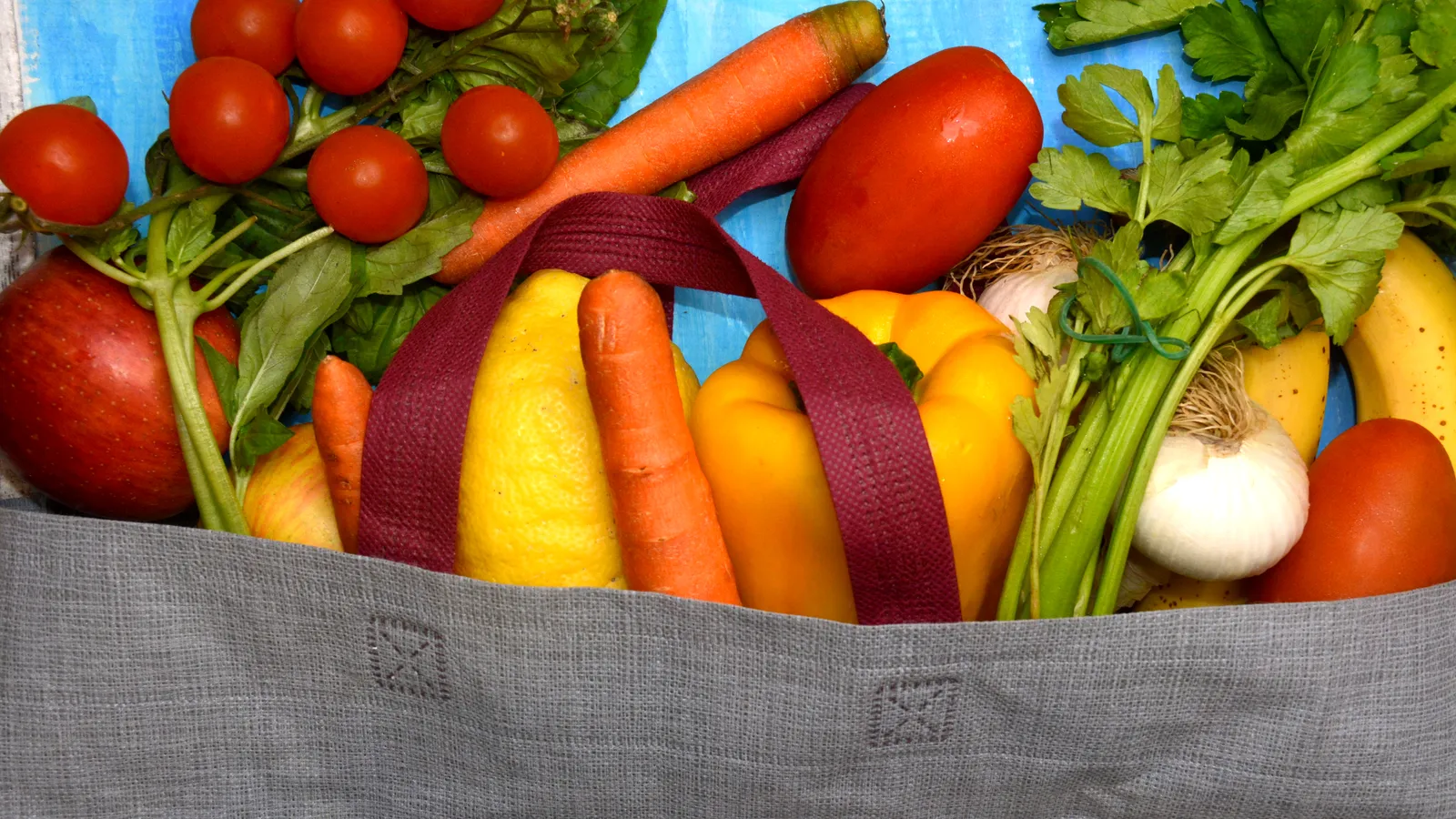
The target is about 2.5 cups of vegetables and 2 cups of fruit a day for most adults. That sounds like a lot until you see it spread out: fruit with breakfast, a vegetable at lunch, two at dinner.
Frozen counts. Canned counts, rinsed if it is salted. Variety matters more than any single superfood, because different plants bring different fiber types and micronutrients.
One caution worth naming: juice is not a substitute. It carries the sugar without the fiber that makes whole fruit filling.
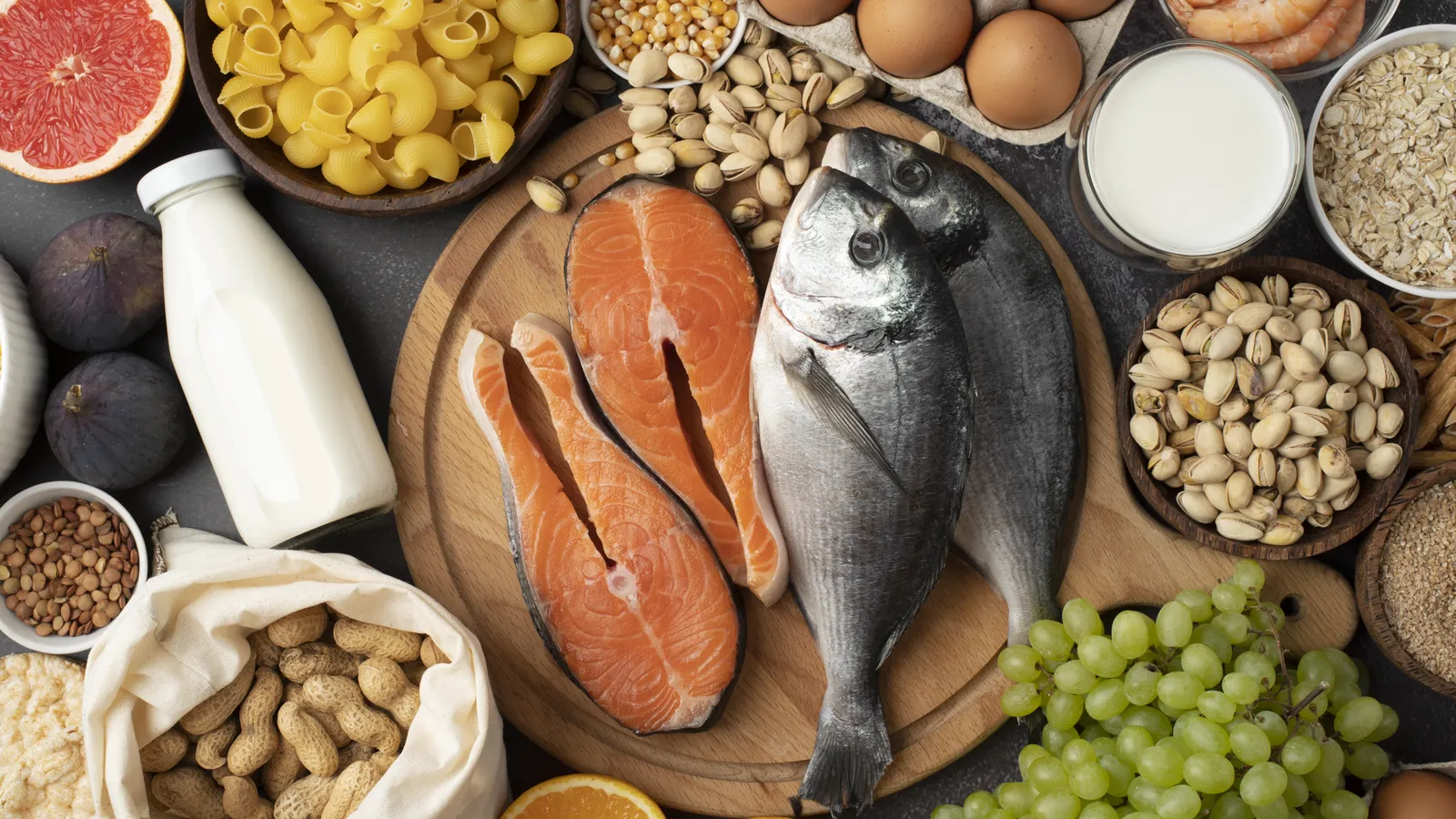
Protein: enough, and spread out
Protein is the nutrient most people under eat and most articles overcomplicate. The official RDA of 0.8 g per kg of body weight is a floor set to prevent deficiency, not a target for someone lifting weights or trying to stay strong at 65.
For general health, 1.2 to 1.6 g per kg is a reasonable range. A 70 kg (154 lb) adult lands around 85 to 110 g a day. Adults over 60 should sit at the higher end, because aging muscle responds less efficiently to the same amount of protein.
Spread it across meals instead of stacking it at dinner. If you want the arithmetic done for you, our protein calculator and the deeper breakdown in how much protein per day cover it.
Carbs are not the problem, refined carbs are
Whole grains, beans, fruit, and starchy vegetables come packaged with fiber, which slows digestion and feeds gut bacteria. Refined carbs arrive stripped of most of it.
Most Americans get roughly half the fiber they need. Raising it is one of the few changes that improves digestion, blood sugar, and appetite at the same time.
The practical version: make most grains whole, eat beans or lentils a few times a week, and keep fruit in the house where you can see it.
Fat: quality over quantity
The low fat era ended for a reason. What matters more than total fat is the type.
Unsaturated fats from olive oil, nuts, seeds, and fatty fish support heart health. Saturated fat is worth limiting, and trans fat is worth avoiding entirely.
You do not need to measure oil. You do need to notice whether most of your fat comes from a bottle of olive oil or from a bag of something crunchy.
The two numbers worth watching
Added sugar and sodium are the two easiest wins for most people, because most of both arrive without being tasted.
The American Heart Association suggests capping added sugar at about 25 g (6 teaspoons) a day for women and 36 g (9 teaspoons) for men. A single 355 ml (12 oz) soda can exceed that on its own.
For sodium, the FDA points to 2,300 mg a day as an upper limit, and about 70 percent of what Americans eat comes from packaged and restaurant food, not the salt shaker. Cooking more meals at home does most of the work here.
Ultra-processed food, explained honestly
Ultra-processed does not mean poisonous. It means industrially formulated: engineered for shelf life and palatability, usually low in fiber, high in refined starch, sugar, sodium, and fat.
The most useful evidence here is a controlled NIH trial in which people ate about 500 more calories a day, and gained weight, when offered an ultra-processed menu matched for calories, sugar, fat, and salt. Same nutrients on paper, different outcome.
The takeaway is not that these foods are forbidden. It is that they are easy to overeat, so the more of your week they cover, the harder everything else gets. Our guide to healthy eating on a budget covers how to cut them without spending more.
Do you need supplements?
For most healthy adults eating a varied diet, a daily multivitamin has not been shown to deliver much measurable benefit, and the NIH Office of Dietary Supplements is direct about the weakness of the evidence.
Gaps are a different story. Vitamin D, vitamin B12, iron, and folate during pregnancy are common and legitimate reasons to supplement, ideally after a blood test rather than a guess.
Supplements are not regulated like drugs. If you take one, treat it as a targeted fix for a known gap, and tell your doctor about it, especially if you take prescription medication. If your interest is energy specifically, nutrients involved in energy production is the more useful place to start.
What a normal day looks like
Guidelines are abstract. A day is not.
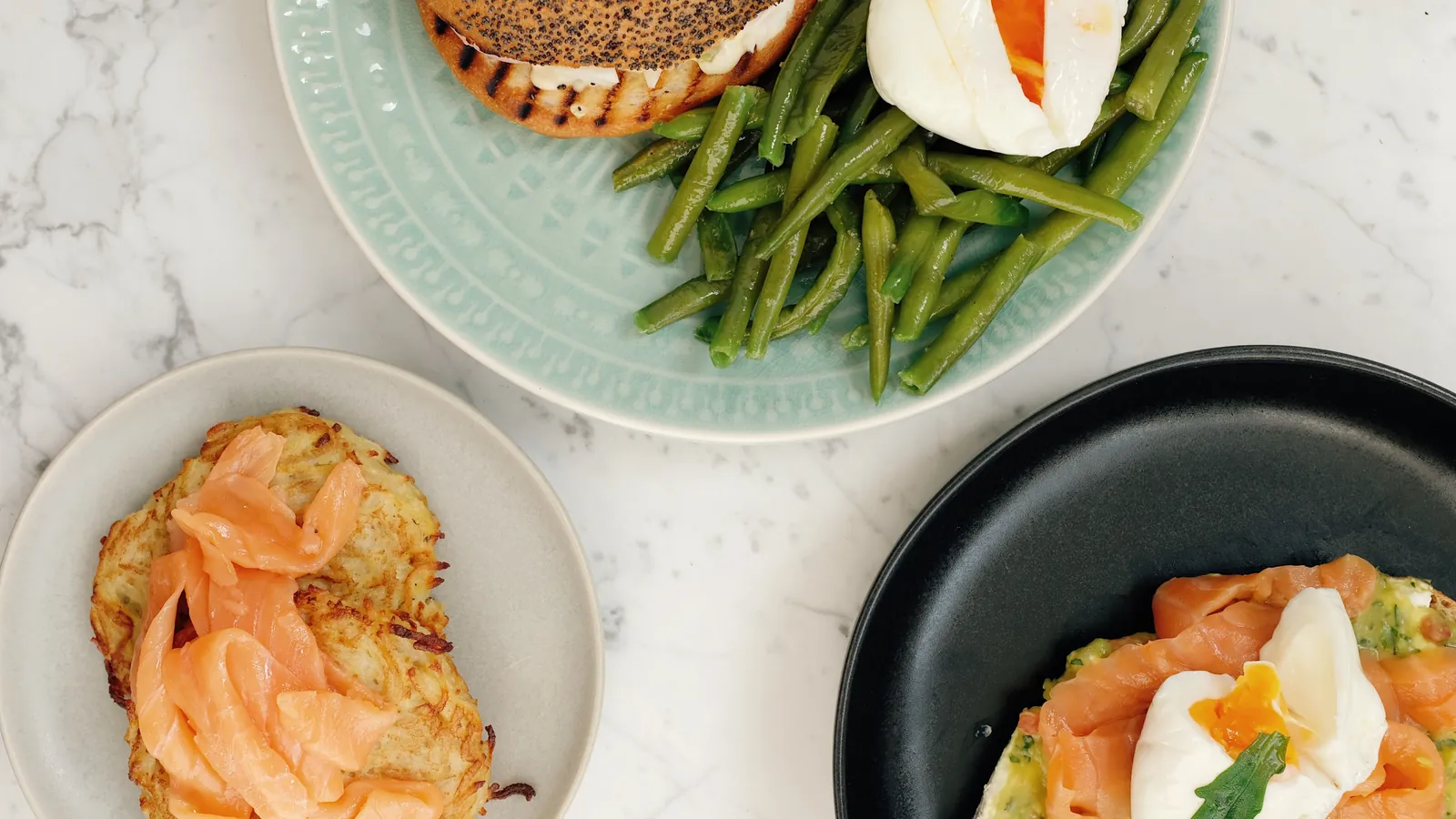
Breakfast: plain Greek yogurt with berries and walnuts, or eggs with whole grain toast and whatever vegetable is already open. Roughly 25 to 30 g of protein either way.
Lunch: a base of grains or beans, a protein, and as many vegetables as fit, dressed with olive oil. Leftovers do this job better than anything you buy.
Dinner: protein, two vegetables, a starch you actually like. This is where most people already do fine.
Snacks: fruit, nuts, yogurt, or cheese. The goal is not to snack less, it is to have snacks that carry protein or fiber.
Drinks: water and coffee by default. Alcohol is worth counting, because the calories are invisible and it reliably degrades your sleep, which then makes the next day's eating harder. Our piece on sleep habits and daily performance covers that loop.
Make it stick
The best eating pattern is the one still running in March. A few things that survive real life:
- Decide once. A default breakfast and two or three default lunches remove most daily decisions.
- Shop the plate. If vegetables and protein are in the fridge, the plate mostly builds itself.
- Change one thing at a time. Fiber first, then added sugar, then sodium is a reasonable order.
- Do not treat one meal as a verdict. Consistency across weeks beats perfection across days.
None of this requires a new diet name. It requires the same few decisions, repeated more often than not.
Frequently asked questions
- Should I count calories or change what I eat?
- For most people, changing the composition of meals comes first. Protein, fiber, and whole foods affect fullness, so intake often falls without counting. Counting can be a useful short-term diagnostic if progress stalls, but it is a tool, not the goal.
- How many meals a day is best?
- Total intake and food quality matter far more than meal frequency. Three meals, or two meals and a snack, suits most people. Choose the pattern you can keep without getting so hungry that the next meal makes the decision for you.
- Do I need to buy organic?
- Eating more vegetables and fruit matters more than whether they are organic. Conventional produce is not a reason to eat less of it. If budget is the constraint, frozen and canned options carry similar nutrition at a lower price.
- Is saturated fat back to being fine?
- The evidence is more nuanced than either headline suggests, but major guidelines still recommend limiting it and favoring unsaturated fats from olive oil, nuts, seeds, and fish. What you replace it with matters: swapping saturated fat for refined carbohydrate does not help.
Sources
- Dietary Guidelines for Americans, 2020-2025 (USDA and HHS)
- Healthy Eating Plate (Harvard T.H. Chan School of Public Health)
- Healthy diet fact sheet (World Health Organization)
- Added Sugars (American Heart Association)
- Sodium in Your Diet (U.S. Food and Drug Administration)
- NIH study finds heavily processed foods cause overeating and weight gain (National Institutes of Health)
- Multivitamin/mineral Supplements: Health Professional Fact Sheet (NIH Office of Dietary Supplements)
- Dietary Reference Intakes: The Essential Guide to Nutrient Requirements (National Academies Press via NCBI Bookshelf)
This article is for informational purposes only and is not a substitute for professional medical advice, diagnosis, or treatment. Always seek the advice of your physician or another qualified health provider with any questions you may have. Read our full medical disclaimer.
Comments (0)
- Be the first to comment.