Sleep Habits That May Affect Daily Performance
You may be in bed for eight hours and still sabotaging tomorrow. Seven common sleep habits that quietly erode focus, mood, and energy, ranked by how much they matter.
Plenty of people technically allocate enough time for sleep and still drag through their days. The gap is usually not hours; it is habits that degrade what happens inside those hours. Sleep quality responds to inputs across the whole day, and a handful of common behaviors do most of the damage.
Here are seven, roughly ranked by impact, each with the fix.
1. The floating schedule
Sleeping 11 to 7 one night and 1 to 9 the next gives you eight hours both times, and mediocre performance both days. Your circadian system optimizes hormone timing, body temperature, and sleep architecture around predictability. When timing floats, deep sleep and REM land at the wrong phases and you get less of each. The single highest-yield fix in sleep: a fixed wake time, every day, give or take an hour.
2. Weekend catch-up as a strategy
Burning the candle Monday through Friday and banking ten-hour nights on weekends feels like balancing the books. Research disagrees: performance does not fully recover, and the late weekend mornings shift your body clock, making Sunday-night sleep elusive and Monday mornings brutal. If you need recovery sleep, take it as an earlier bedtime, not a later morning.
3. The nightcap
Alcohol is sedating, which convinces people it helps sleep. It helps unconsciousness; it harms sleep. As your body metabolizes the dose, the second half of the night turns light and fragmented, REM gets suppressed, and you wake at 3 a.m. warm and alert. Keep drinks at least three hours from lights-out, and expect noticeably better mornings on alcohol-free nights.
4. The bedtime scroll
The cost is double. First, the obvious delay: 20 minutes becomes 70. Second, the activation: feeds are engineered to provoke reaction, and a provoked brain does not descend gracefully into sleep. The light is real but secondary; the content is the main offender. Charge the phone across the room and the entire problem disappears mechanically.
5. Caffeine bookkeeping errors
Caffeine has a half-life of five to six hours, so the 4 p.m. cup leaves a quarter of its dose in your system at 3 a.m. It rarely prevents sleep outright; it thins it, shaving deep sleep without you noticing anything except mediocre mornings. Set a personal caffeine curfew around early afternoon.
6. Dinner near midnight
Heavy, late meals force digestion and sleep to compete, raise core temperature when it should be falling, and invite reflux when you lie down. Finish substantial food two to three hours before bed; a light snack later is fine.
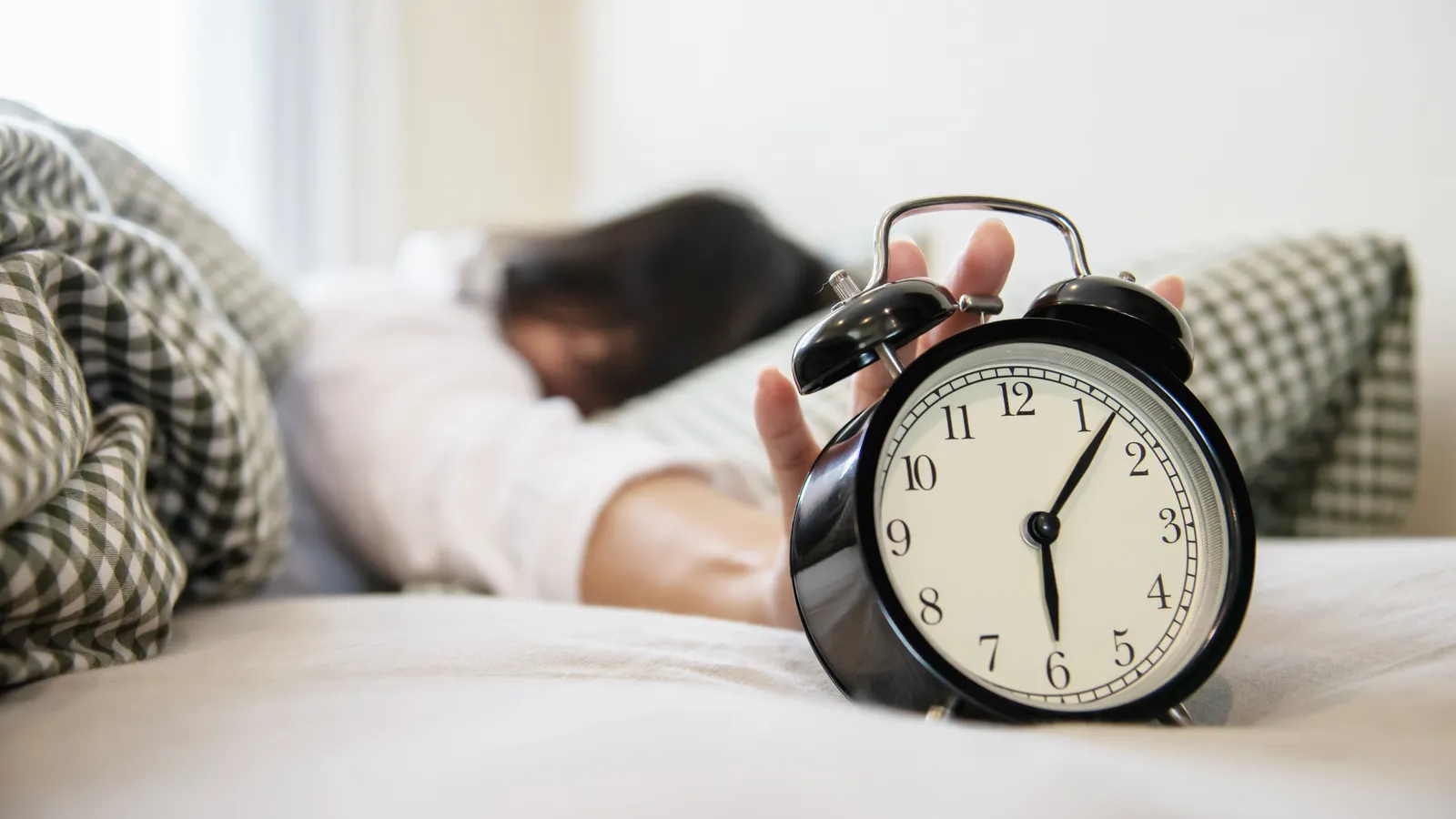
7. The snooze ritual
Each 9-minute fragment is too short to do anything restorative, and serial interruptions of late-stage sleep deepen morning grogginess. One alarm, set honestly, placed across the room if necessary, beats five negotiations with it.
The bottom line
Audit your week against this list and fix the worst offender first: usually the floating schedule. Stabilize wake time, then move the last caffeine earlier, then separate alcohol and screens from bedtime. Each fix compounds the others, and the payoff arrives within days as a sharper, smoother daytime.
Frequently asked questions
- Can I catch up on sleep during weekends?
- Partially at best. Sleeping in repays some short-term debt but shifts your circadian phase later, which is why Sunday night insomnia and rough Mondays follow. A consistent wake time with an earlier bedtime recovers debt with less disruption.
- Why do I wake at 3 a.m. after drinking?
- Alcohol sedates you into the first sleep cycles, then its breakdown products act as a stimulant a few hours later. The second half of the night becomes light and fragmented, with less REM. Finishing drinks at least three hours before bed reduces the effect.
- Is the snooze button actually harmful?
- Those 9-minute fragments are too short to complete any restorative sleep stage, and repeated jolts can deepen grogginess. Setting the alarm for the latest realistic time and getting up once is consistently the better deal.
Sources
- About Sleep (Centers for Disease Control and Prevention)
- Healthy Sleep (National Heart, Lung, and Blood Institute)
- How Sleep Works (Sleep Foundation)
This article is for informational purposes only and is not a substitute for professional medical advice, diagnosis, or treatment. Always seek the advice of your physician or another qualified health provider with any questions you may have. Read our full medical disclaimer.
Comments (0)
- Be the first to comment.